
I would never have described myself as a gamer but looking back, games have always been a part of my life. I have used games in many of the ways Jane McGonigal describes them in her book, Reality is Broken: as brain builders, as social connectors, and as emotional fulfillment devices. I am a fan and I am committed to increasing the use of games in our library but I am not as certain as she is that games can solve all our problems. After reading the first third of her book, I wondered if there was a tipping point before which games were on track to be a force for good and solve the world’s problems but at some point a switch was flipped and the games became more about pure marketing, eyes on screens, and making money for some and distracting the rest of us. What have I gained from playing? What have I seen others gain from playing? What can I do in the library with games? How can I help my students get more out of the games they are already playing and how can I help my community be thoughtful about the role games play in our lives?
My husband and I started playing games with our children when they were little, quite little really. We saw the effect of television on them – bodies still, mouths hanging open – and we knew we needed to limit their exposure, but we also saw that some games on the computer were fun and interactive. The games opened up opportunities to enjoy a shared set of content and jokes but were less passive than watching a show or even reading a book. Our kids liked story games but couldn’t navigate them on their own so some games we called “watch Dad” games. But the kids were not “watching”, they were directing. We loved the Sam & Max games and Pajama Sam – Life is Rough When You Lose Your Stuff. The kids were learning about rhyming and problem solving in a family time sort of way. Those types of storytelling/world building games are still our family favorites but I don’t see them much in popular culture.
I play the Spelling Bee because I need the affirmation and the brain break, but I also need a game that ends. I don’t want to get sucked into a game where I could lose hours. Reading McGonigal describe World of Warcraft made me worry about the state of our nation. Just as our society is getting more and more socio-economically divided, I am afraid that this kind of game is a useful distraction and nothing more. So many people are being forced to accept stultifying low-wage service jobs and then they only find intellectual stimulation and camaraderie online? Sounds like a recipe for disaster. I want people with tough lives to be offered diversions but I worry that if we make these online games SO diverting, people will be lulled into thinking that these online successes are enough for them and they won’t spend that energy and those skills on the real world. I’m not sure how to balance or bridge this world of online engagement and the world of real social and technological advancement and I don’t think the thought leaders in this field have been able to steer it in the direction McGonigal was predicting. I see kids in school interacting with each other because of and through some games on their phones and I know there are real relationships being built but I also want to help steer the kids towards playing games that value cooperation and problem solving rather than mindless shooting and nihilistic scenarios.
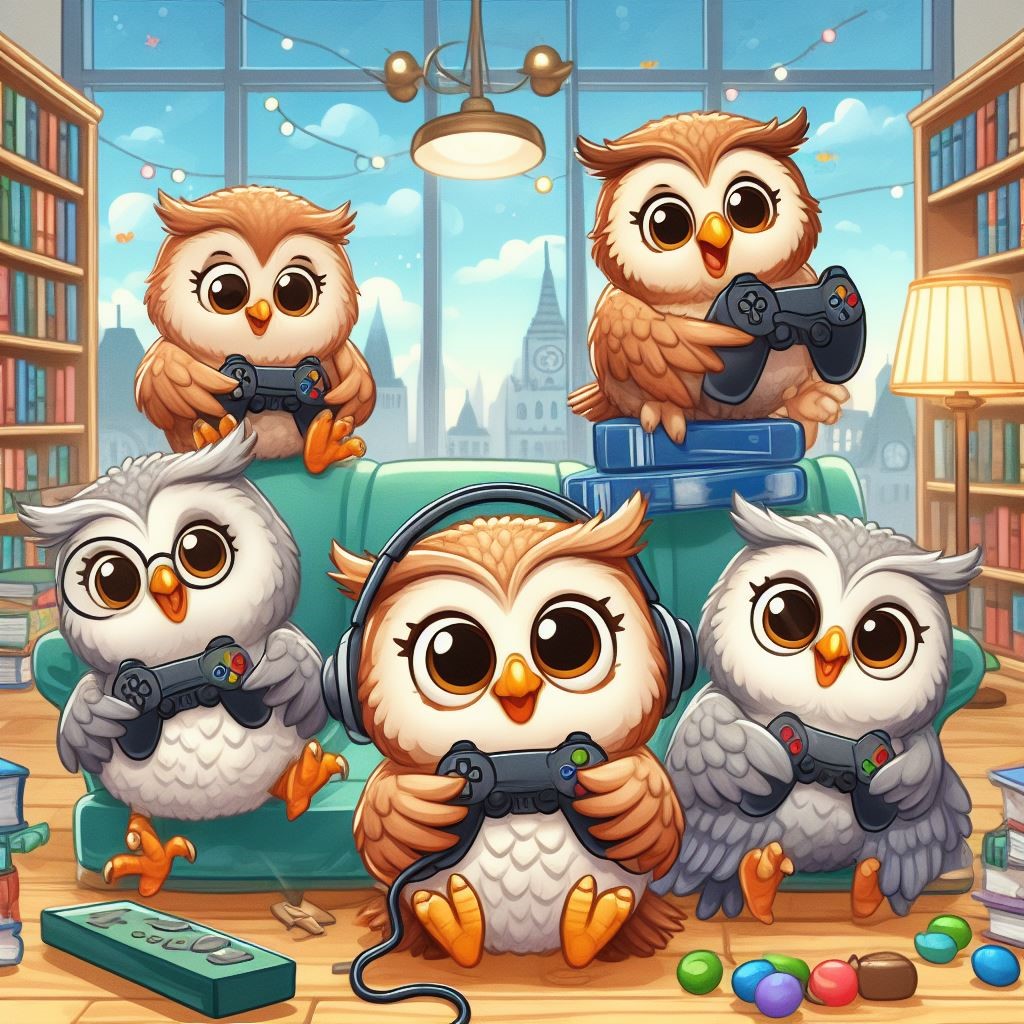
When I think about games in schools, McGonigal’s definition of the four traits of games: “a goal, rules, a feedback system, and voluntary participation” (p.21) are very helpful. Teachers often talk about adding games into the classroom but if the game is required for the grade, then there really is no voluntary participation and it’s not really a game. The only exception to this that I can imagine working well, (though probably not in my school) would be if a teacher was a real expert in tabletop, Dungeons & Dragons type games and was able to design some fun project based learning opportunities where the teacher acts as Game Master to “weave a story with the players, who take on characters within that story.” (El-Tayib). With the right teacher and the right class, I can see this providing the kinds of choices that would allow for the game to feel voluntary. Classrooms are good at setting goals (content to master) and making rules and feedback systems (grades) so I can understand why they seem a natural place for games but I think the library is better because it is a place for choice and students can choose to play or not play.
I loved the articles “Why School Librarians Should Embrace Gaming in the Library” by Aaron Elkins (Knowledge Quest) and “Libraries, Videogames and Civic Engagement” by Jenny Levine (Library Technology Reports). Both articles gave me so many ideas for how to start and organize video game play at BINcA. I particularly appreciated the Levine article because I am always looking for ways to boost civic engagement at the school. We have a small flock of boys who stay late – often later than me – who are playing games on their phones or watching videos of game play on the two desktop computers we have set up in the Library Annex. We are still working on building out the space so this week I insisted we put the big tv screen up on the wall that I have been asking for and I will start gathering my gaming advisory team. We have teachers ready to be the faculty advisors so I know this is a “If you build it, they will come” situation. Along with the suggestions in the articles, I will reach out to the Boston Public Library Teen Central folks for more ideas about library appropriate games and how to organize playing times. I’m excited about this possibility and I know gaming will help connect a new group of young people to our new library!
Works cited:
- El-Tayib, Bebarce. “Role-Playing with Educational Intent.” School Library Journal, February, 2020.
- Elkins, Aaron J. “Let’s Play! Why School Librarians Should Embrace Gaming in the Library.” Knowledge Quest, 43:5. May/June, 2015.
- Levine, Jenny. “Libraries, Videogames and Civic Engagement.” Library Technology Reports, July, 2009.
- McGonigal, Jane. Reality Is Broken:Why Games Make Us Better and How They Can Change the World. New York: Penguin, 2011.
- Family conversations with Stuart, Ezekiel and Beatrice Jackson
 Library at BINcA
Leave a comment